.png)
Key Signs Your Roof Needs Replacement Before Small Issues Turn Costly
- Jul 22
- 8 min read
A roof problem rarely starts as a dramatic ceiling collapse. More often, it begins as a faint stain, a few loose shingles, a soft spot near the gutter, or a drip that only appears during heavy rain. Those early clues are easy to miss, especially when the rest of the home feels move-in ready.
For first-time homeowners, the roof can feel like one of the most mysterious parts of the house. You see it every day, but you may not know what “normal wear” looks like or when a small repair is no longer enough. The good news is that your roof usually gives warning signs before a minor issue turns into water damage, mold, damaged insulation, or structural trouble.
Knowing what to look for, when to inspect, and when to call a roofing professional can help you protect your home and avoid surprises.

Start with the most common warning signs
Some roof issues are obvious. Others show up inside the home long before they are easy to spot from the ground. Pay attention to changes both outdoors and indoors, especially after storms or long stretches of rough weather.
Water stains, leaks, and damp spots
A leak is one of the clearest Signs Your Roof Needs Replacement or at least a professional inspection. Water can enter at weak points around shingles, flashing, vents, skylights, chimneys, or valleys where roof planes meet.
Inside the home, watch for:
Brown or yellow stains on ceilings
Peeling paint near upper walls
Damp insulation in the attic
Musty odors after rain
Drips around light fixtures or vents
Bubbling drywall
A leak does not always appear directly below the roof damage. Water can travel along rafters, pipes, or beams before it becomes visible. That means a small ceiling stain in one room may point to a problem several feet away on the roof.
Do not ignore a leak that “only happens during big storms.” Wind-driven rain can expose weak spots that normal rain does not reach. Over time, that same weak spot can grow.
Missing, cracked, or curling shingles
Shingles protect the roof deck from water and sun exposure. Once they start failing, the layers underneath become more vulnerable.
From the ground, look for shingles that are:
Missing entirely
Cracked across the surface
Curling at the edges
Buckling or lifting
Darker or lighter than surrounding shingles
Loose after heavy wind
A few damaged shingles may call for repair. Widespread damage across several roof sections can signal that the roof is nearing the end of its useful life.
Shingles also lose protective granules over time. If you notice gritty material collecting in gutters or near downspouts, the shingles may be wearing down. Granule loss can leave the roof more exposed to sunlight and weather, which speeds up aging.
Sagging areas on the roofline
A roof should have clean, even lines. A sagging section is more serious than a cosmetic issue. It may point to trapped moisture, weakened decking, structural strain, or long-term water damage.
Look at the roof from the curb and from the sides of the home. If part of the roof appears dipped, wavy, or uneven, call a professional. Do not climb onto a sagging roof. It may not support weight safely.
Sagging can also show up inside the attic. Rafters that appear bowed, wet decking, or daylight coming through boards can all point to bigger concerns.
Damaged flashing around roof openings
Flashing is the metal material used around chimneys, vents, skylights, walls, and other roof intersections. It helps direct water away from joints and seams.
When flashing cracks, rusts, separates, or pulls away, water can slip underneath the roofing materials. This type of problem often causes leaks that seem hard to track.
Common trouble spots include:
Chimney bases
Plumbing vent pipes
Skylight edges
Dormer walls
Roof valleys
Where a porch roof meets the main house
If the shingles look fine but leaks keep appearing, flashing may be the reason.

Check the attic before problems reach the living space
The attic is one of the best places to spot roof trouble early. Many homeowners only go into the attic when storing boxes, but a quick look a few times a year can reveal leaks, ventilation issues, and moisture before they reach finished rooms.
Use a flashlight and stay on safe walking surfaces. If the attic is hard to access or poorly lit, ask a professional to inspect it.
Look for these signs:
Dark streaks on roof decking
Damp or compressed insulation
Rust on nails or metal connectors
Mold-like growth on wood surfaces
Daylight coming through roof boards
Warm, humid air that feels trapped
Animal nesting or chew marks near vents
Good attic ventilation matters. When warm, moist air gets trapped, it can shorten roof life from the underside. In colder climates, poor ventilation can also contribute to ice dams when heat escapes into the attic and melts snow on the roof.
If the attic smells musty or feels unusually humid, the roof may not be the only issue. Ventilation, insulation, bathroom fans, and air sealing may all need attention.
Pay attention to the age of the roof
Roof age matters, even if there are no obvious leaks yet. Different materials have different life spans, and actual performance depends on weather, installation quality, ventilation, maintenance, and roof slope.
Common residential roofing materials include:
Roofing material | General expectation | What to watch for |
Asphalt shingles | Common and widely used across the U.S. | Granule loss, curling, missing shingles, brittle edges |
Metal roofing | Often long-lasting when installed well | Loose fasteners, rust, failed sealants, damaged seams |
Wood shakes or shingles | Natural look but higher maintenance | Splitting, rot, moss, insect damage |
Tile roofing | Durable but heavy and brittle | Cracked tiles, underlayment wear, broken flashing |
Slate roofing | Very durable but specialized | Broken slate, failing fasteners, flashing problems |
If the seller did not provide roof age during the home purchase, check inspection reports, permits, receipts, or warranty documents. You can also ask a roofing contractor to estimate age based on material condition.
A roof does not need to be replaced just because it is older. Still, an older roof deserves closer attention, especially before refinancing, selling, renovating, or making major interior upgrades.
Understand how weather affects roof longevity
Weather is one of the biggest factors in how long a roof lasts. A roof in a mild, shaded area may age differently than the same roof exposed to intense sun, hail, heavy snow, or coastal winds.
Sun and heat can dry out materials
Strong sunlight and high temperatures can make roofing materials dry, brittle, and less flexible. Asphalt shingles may crack or lose granules faster when exposed to steady heat. South-facing roof slopes often age faster because they receive more direct sun.
Heat can also build up in the attic if ventilation is poor. That trapped heat can affect shingles from below and make the home harder to cool.
Wind can lift shingles and open gaps
Wind does not always tear shingles off completely. Sometimes it lifts the edges just enough to damage the seal. Once that seal is broken, rain can get underneath.
After a windstorm, check for shingles in the yard, uneven roof patches, loose ridge caps, or exposed underlayment. Even one missing shingle can create a path for water.
Hail can bruise or crack the surface
Hail damage can be hard to identify from the ground. It may look like small dark marks, dents, missing granules, or soft spots on shingles. Gutters, downspouts, vents, and metal flashing may also show dents.
If nearby homes are getting roof inspections after a hailstorm, it is smart to schedule one too. Hail damage can shorten roof life even if leaks do not show right away.
Snow and ice can strain the roof
In colder regions, snow adds weight and ice can block normal drainage. Ice dams form when snow melts, runs down the roof, and freezes near the edge. Water can then back up under shingles.
Signs of ice dam trouble include icicles along the gutters, water stains near exterior walls, and peeling paint near ceilings. Better insulation and ventilation often help reduce this risk.
Heavy rain can expose weak points
A roof may seem fine during light rain but leak during long storms. Heavy rain tests flashing, valleys, gutters, and low-slope areas. If water cannot drain properly, it can pool or force its way into small openings.
Keep gutters clear so water moves away from the roof and foundation. Overflowing gutters can send water under roof edges and behind fascia boards.

Make inspections and maintenance part of homeownership
Regular roof care does not have to be complicated. A simple routine can help catch problems early and extend the life of the roof.
Plan to inspect your roof from the ground at least twice a year, ideally in spring and fall. Add quick checks after major storms, high winds, hail, or heavy snowfall.
A basic homeowner roof check can include:
Walking around the home and looking for missing or lifted shingles
Checking gutters for granules, leaves, and clogs
Looking at ceilings and upper walls for stains
Inspecting the attic for dampness or daylight
Trimming branches that rub against the roof
Making sure downspouts move water away from the house
Watching for moss, algae, or debris buildup
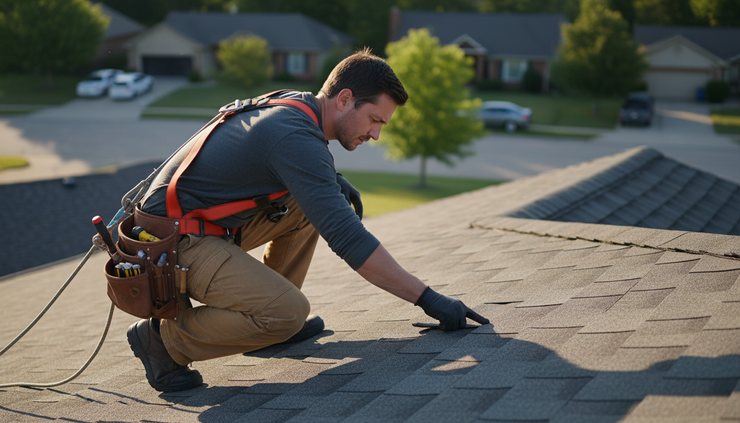
Leave roof climbing to someone with the right safety equipment. Falls are a real risk, and walking on shingles can cause damage if done incorrectly.
Maintenance also includes fixing small problems quickly. A loose shingle, cracked vent boot, clogged gutter, or minor flashing gap may seem harmless. Given enough time and rain, it can turn into a much larger repair.
Know when repair is not enough
Many roof problems can be repaired, especially when damage is limited to a small area. The question is whether repair makes sense for the age and condition of the whole roof.
Replacement may be the better choice when:
Damage appears across multiple roof slopes
Shingles are brittle, curling, or shedding granules heavily
Leaks keep returning after repairs
The roof deck is soft or sagging
Multiple layers of roofing already exist
Storm damage affects a large area
The roof is near the end of its expected service life
You are planning to stay in the home for years and want fewer surprises
A patch may stop water for now, but it may not solve widespread aging. If you keep paying for repeated repairs, replacement may provide better long-term value.
That said, do not assume the worst. A professional inspection can help separate urgent problems from manageable ones.
Call a professional when the signs are unclear or safety is involved
Some roof clues are easy to spot. Others require training. A roofing professional can inspect materials, flashing, ventilation, decking, gutters, and drainage patterns. They can also tell whether a problem comes from the roof itself or from related issues like condensation, plumbing, or poor attic ventilation.
Call a professional if you notice:
Active leaks or water stains
Sagging roof sections
Missing shingles after a storm
Hail marks or widespread granule loss
Soft spots on the roof or in the attic
Damaged flashing around chimneys or vents
Repeated repairs in the same area
Signs of mold-like growth or trapped moisture
A roof that has not been inspected in several years
When choosing a contractor, ask for clear photos, written findings, proof of licensing where required, proof of insurance, and a written estimate. If replacement is recommended, ask what makes repair insufficient. A trustworthy contractor should be able to explain the problem in plain language.
It can also help to get more than one opinion, especially for large replacement projects. This gives you a better sense of scope, materials, timing, and urgency.
Do not wait for a small issue to spread
Roof problems tend to get more expensive when water is involved. A missing shingle can lead to a wet roof deck. A wet roof deck can lead to damaged insulation. Damaged insulation can lead to stained ceilings, musty smells, and indoor repairs that cost far more than the original roof fix.
Small issues also affect other parts of the home. Gutters, fascia, soffits, siding, attic insulation, and interior drywall can all suffer when the roof stops doing its job.
The best time to act is when the problem still looks minor. Take photos, record dates, and keep notes after storms. If you are unsure, schedule an inspection rather than guessing.
A home is easier to care for when you treat the roof as part of regular ownership, not an emergency item you only think about during a leak. Look up, check often, and respond early. A few careful steps now can help keep your home dry, safe, and ready for the years ahead.